Ferula tenuisecta root, with ferutinin assayed in every batch
We are looking for a partner to run the first broodstock trial of this material in fish. The effect has not been demonstrated in any target species — that is what the trial is for. Everything we know, and everything we do not, is on this page.
Part 1. The offer
What we bring
A measured active compound
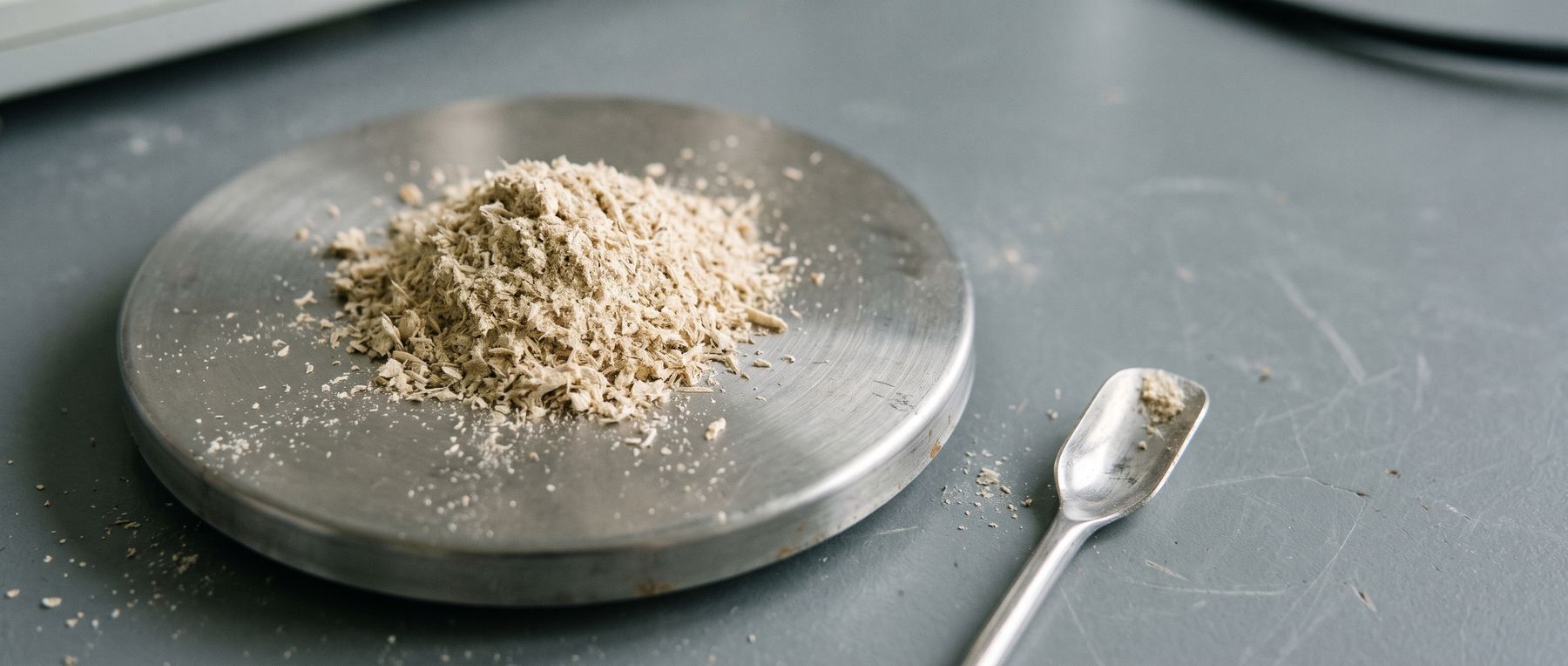
Ferutinin, 9.31% in the current batch, assayed per batch. Not one of the published feeding studies on this root measured it: their doses are kilograms of powder, not milligrams of active compound.
A protocol that can fail honestly
Two co-primary endpoints, three dose levels per sex around the window, fertilisation crossed with control males, feed withdrawn 14 days before induction, bags coded so the fish culturist does not know which dose is which.
The evidence read to the primary sources
Four feeding studies, the mechanism work and the regulatory position, read to the primary sources rather than through other people's citations — which is how the dose ladder below was set.
Supply, not a slide deck
Cleaned and milled root, batch specification and passport, dose conversion for any assay figure, the application instruction for the farm and a dose calculator.
How to read this page
The species below are ordered by how far our evidence sits from each one — not by how interesting each is to us. All eight carry the same four-line frame, and the last line is always the same one: what we do not promise. The dose is stated at the species, not hidden in a shared table.
- Carp family — common carp, silver carp, grass carp. The only group where the evidence sits inside the same family as the target species.
- Gilthead sea bream — its own industry problem and a different product: feminisation instead of fecundity. No data in the family.
- Nile tilapia, European sea bass, rainbow trout, whiteleg shrimp — no data for any of them, and for trout the data that exists runs against us.
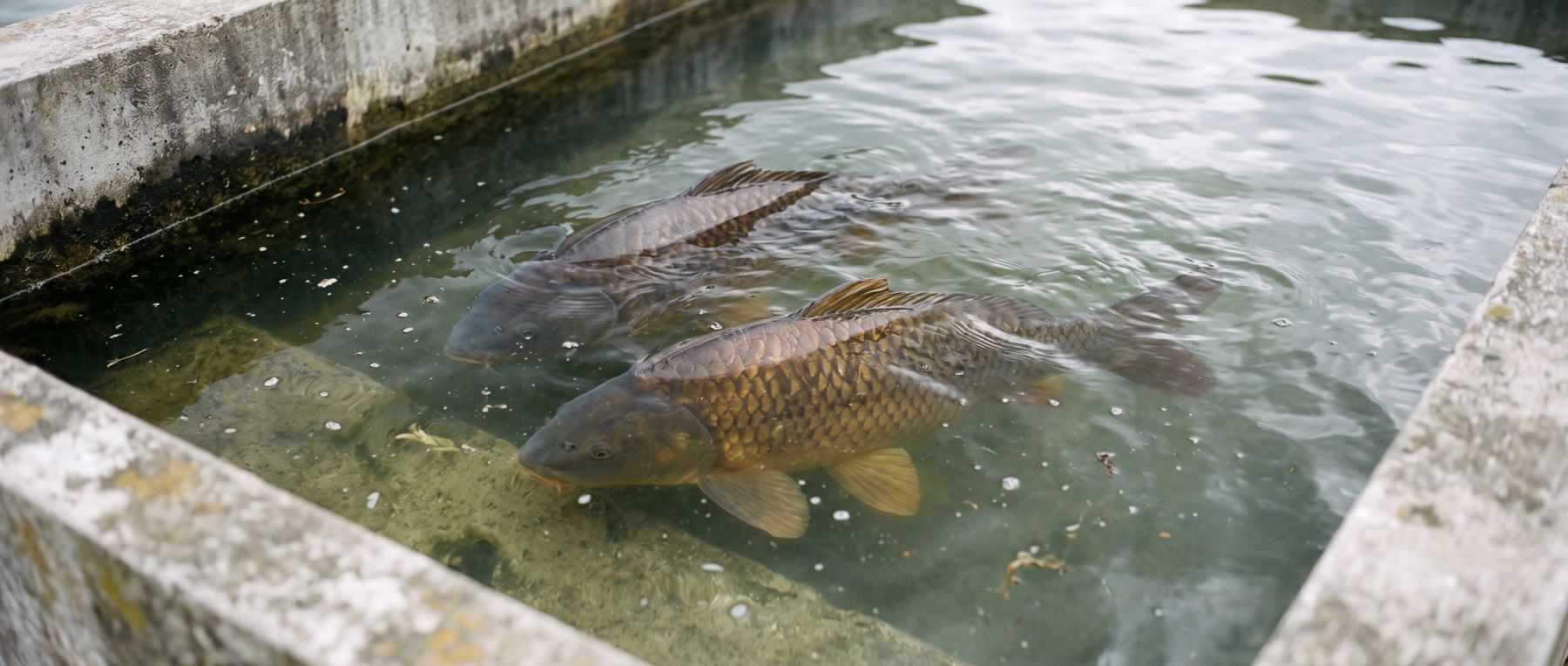
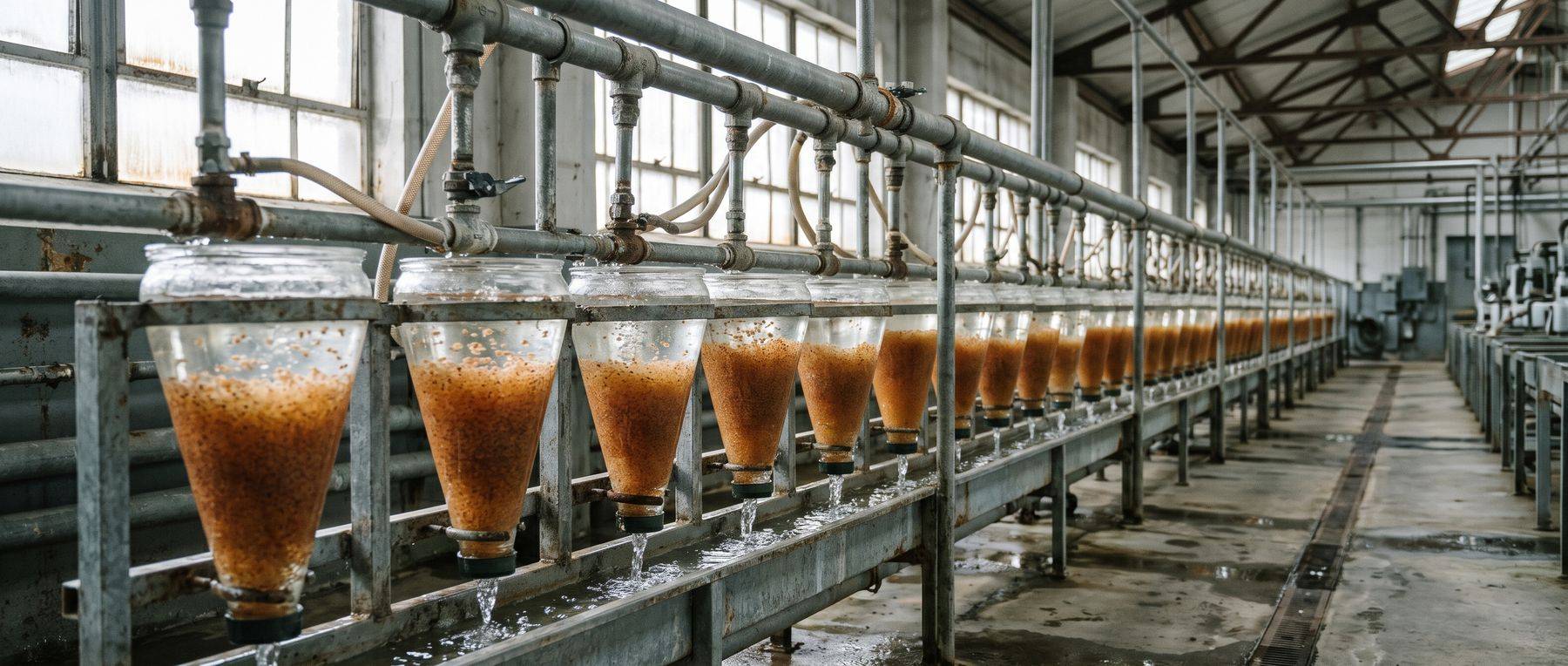
- About the pictures — the species portraits are illustrations, not photographs of our own fish, our ponds or our trial. The charts are drawn from the published figures cited on this page.
Part 2. Eight species
The carp family
Common carp is mandatory; the other two depend on the farm. The problem is the same for all three — what differs is how the dose can be delivered.
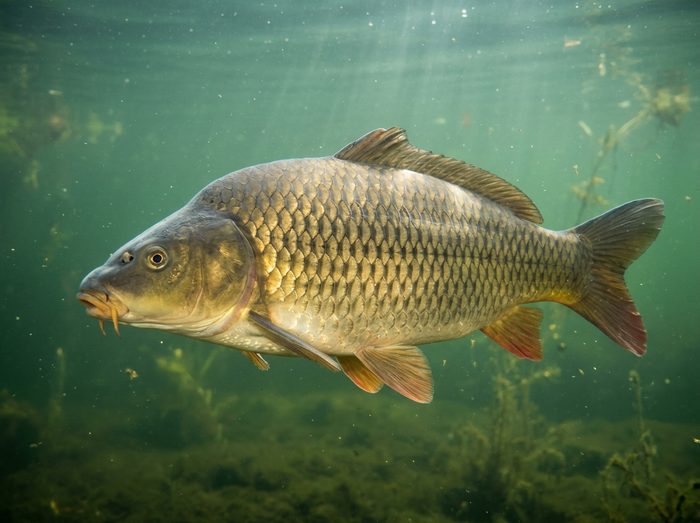
Common carp
Cyprinus carpio
- The farm's problem
- Without a pituitary injection there is no spawning in a hatchery at all. And egg quality scatters from female to female — yet it was settled months before the injection, while the yolk was being laid down.
- What ferutinin does
- Supports vitellogenesis through conditioning — the window where egg quality can still be changed. The injection controls timing, not quality.
- Dose
- Females 1.0 / 2.0 / 3.0 kg/t, working dose 2.0. Males 0.1 / 0.3 / 0.5 kg/t, working dose 0.3. A course of 8–12 weeks, withdrawn 14 days before the injection.
- What we do not promise
- We do not replace the injection: at the induction stage ferutinin works against ovulation. Hatch has never been measured, in any published study, at any dose.
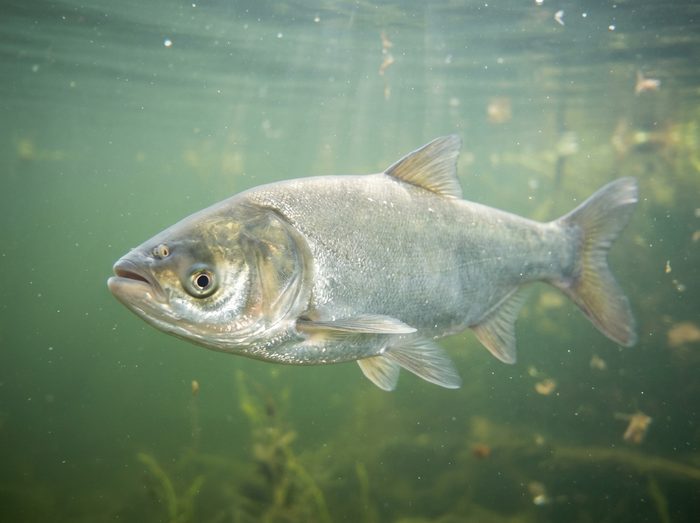
Silver carp
Hypophthalmichthys molitrix
- The farm's problem
- The same as common carp: dependence on the injection, and scatter in egg quality between females.
- What ferutinin does
- The same as common carp. The mechanism transfers without assumptions — it is a cyprinid.
- Dose
- The carp ladder. But first the dose has to be deliverable: silver carp is a filter feeder living on phytoplankton, not on pellets.
- What we do not promise
- Until the farm confirms that its broodstock take pellets reliably and intake can be accounted for, the species stays out of the protocol. An imprecise dose, with the threshold between 1 and 5 g/kg of root, is a lottery.
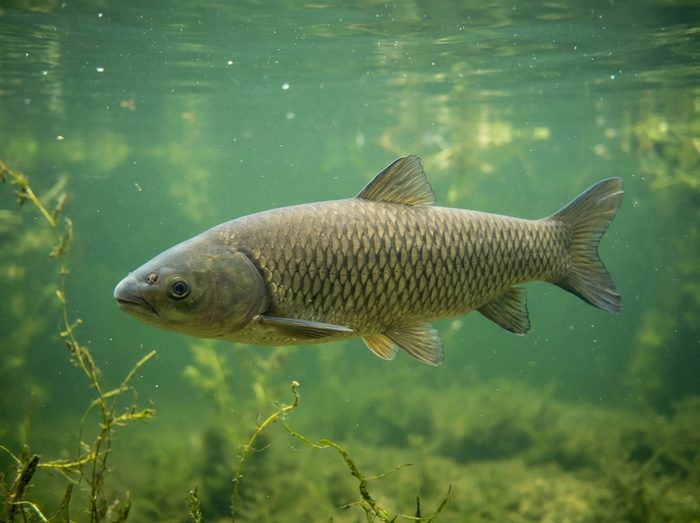
Grass carp
Ctenopharyngodon idella
- The farm's problem
- The same as common carp.
- What ferutinin does
- The same. A cyprinid, so the transfer stays inside the family.
- Dose
- The carp ladder. Grass carp takes pellets more readily than silver carp, but its staple diet is vegetation.
- What we do not promise
- The same dose-delivery constraint as silver carp.
Why this group is stronger than the rest: the feeding data come from goldfish, the receptor data from zebrafish, the basis for the withdrawal rule also from zebrafish, and the biphasic response is confirmed in carp itself. All four pillars sit inside the carp family. No other species on this page has that.
Gilthead sea bream
It gets a section of its own because the product here is different from every other species.
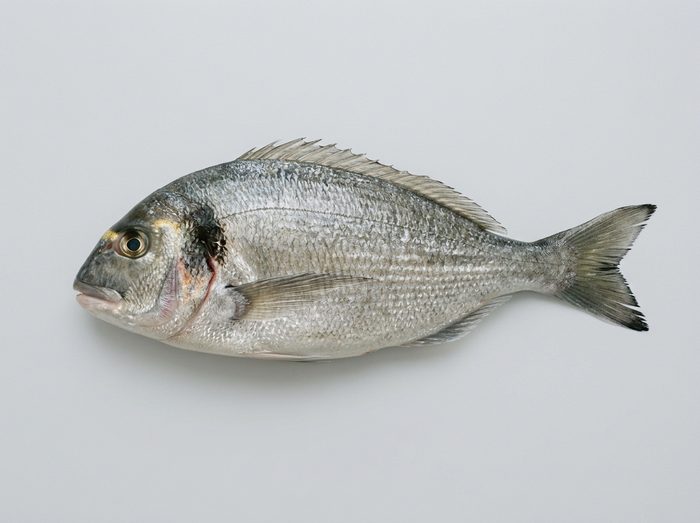
Gilthead sea bream
Sparus aurata
- The farm's problem
- The species starts life male and turns female in its third year, so hatcheries run short of females and cannot predict which fish will convert. Today the fix is an estradiol implant — a steroid hormone.
- What ferutinin does
- A different job here: feminisation, not fecundity. Feed instead of a hormonal implant.
- Dose
- An estimate of 0.2–0.4 kg/t, worked back from the implant protocol that does work. That is the male range of the carp ladder, not the female one — carp doses cannot be carried over.
- What we do not promise
- The direction of the effect is unsettled: the implant feminises, while ethinylestradiol in feed prevented the sex change instead. There is no ferula study in sparids at all, and the species sits wholly inside EU jurisdiction.
Tilapia, sea bass, trout, shrimp
Four species with no data, and one of them has data that runs against us. The frame is the same; the “what we do not promise” line is longer here than elsewhere.
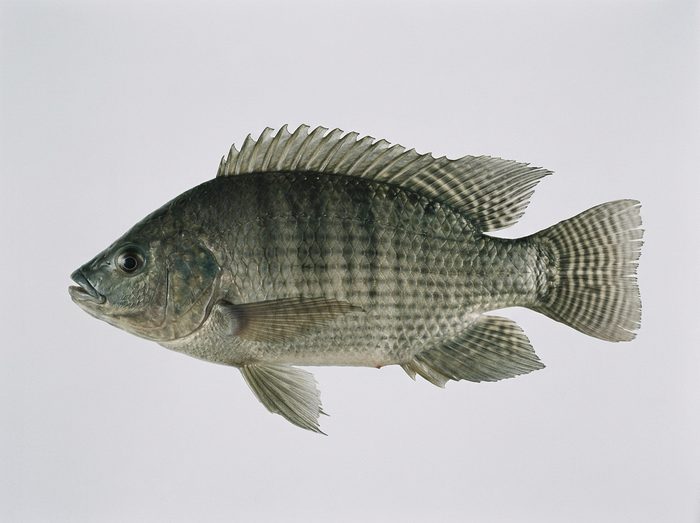
Nile tilapia
Oreochromis niloticus
- The farm's problem
- Here the industry's problem runs opposite to ours: it wants males, which grow faster, and it gets them with methyltestosterone.
- What ferutinin does
- On sex, nothing — we are no help. On broodstock fecundity, possibly.
- Dose
- Below the carp ladder. The reference point is genistein at 300 µg/g of feed with no effect on growth, adjusted for ferutinin being more active than genistein.
- What we do not promise
- This is a safety model, not a market. Tilapia spawns year-round and offspring sex ratio is cheap to read — which makes the species valuable for testing safety, not for selling.
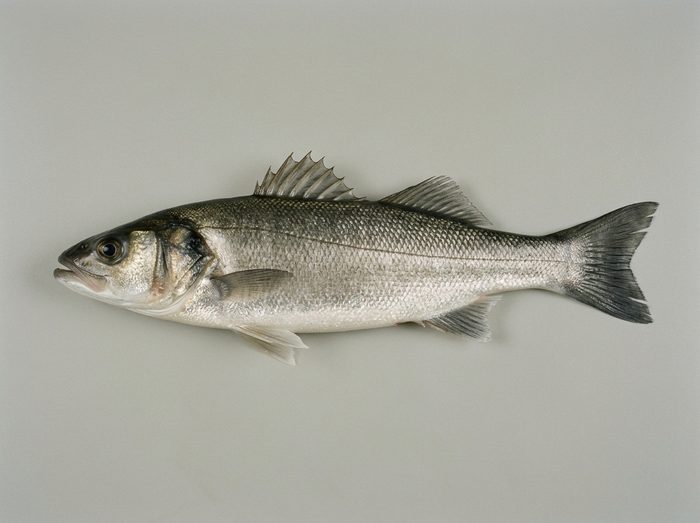
European sea bass
Dicentrarchus labrax
- The farm's problem
- Females grow faster, and farms would like more of them.
- What ferutinin does
- On sex, nothing. The window of sensitivity to estrogens closes in the first year of life, in juveniles, and we work with broodstock only. That leaves fecundity.
- Dose
- No reference point. The ladder has to be built from the carp one with a widened span and mandatory vitellogenin monitoring in males.
- What we do not promise
- There is no angle of its own here, as there is in sea bream, and no ferula data in European sea bass either. The species sits wholly inside EU jurisdiction.
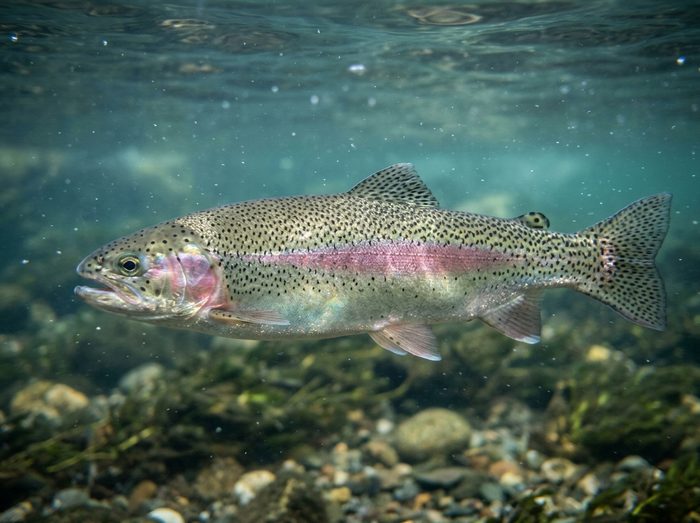
Rainbow trout
Oncorhynchus mykiss
- The farm's problem
- An injection is not required — trout spawn on their own. But spawning among females is not synchronised, and GnRHa is used to synchronise it and to produce out-of-season eggs. Our job here is egg quality and uniformity, not getting rid of a hormone.
- What ferutinin does
- The same as in the carp family: supports vitellogenesis through conditioning. But this is not a cyprinid, so the transfer crosses orders.
- Dose
- To be recalculated, with a margin downward. The only reference point for a phytoestrogen in this species is harm, not benefit.
- What we do not promise
- This is the only one of the eight species where a phytoestrogen has already been tested on broodstock, and the result was negative: a year of genistein at 500–1000 mg/kg delayed spawning, 79% of females ovulated instead of 100%, and fertilisation fell. That is where our rule of an 8–12 week course rather than year-round feeding comes from. The margin is smaller than the numbers suggest: ferutinin is more active than genistein.
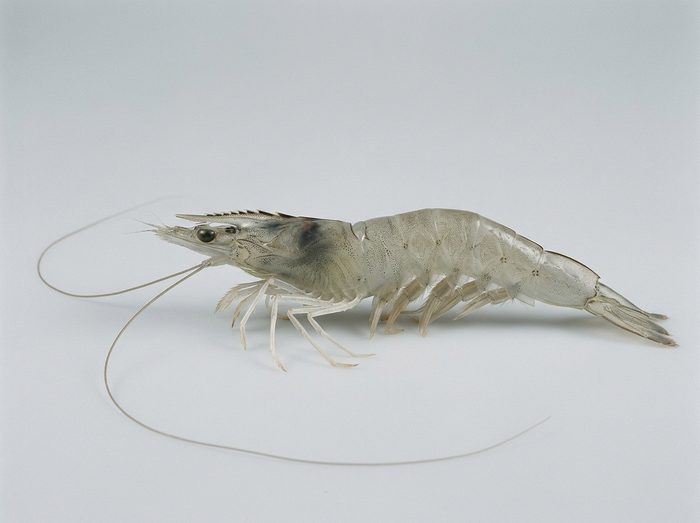
Whiteleg shrimp
Litopenaeus vannamei
- The farm's problem
- Eyestalk ablation — removing a female's eye to force maturation. A recognised animal-welfare problem, and it costs the farm fecundity and offspring quality.
- What ferutinin does
- Replacing ablation means damping the hormone that brakes the gonads. There is no data that ferutinin can: in crustaceans estradiol appears to act through a receptor other than the one ferutinin binds.
- Dose
- ≈9 / 47 / 140 mg ferutinin per kg of dry feed, derived from crab work. The primary endpoint here is not eggs but the share of failed moults: ferutinin carries calcium, and a failed moult kills.
- What we do not promise
- This is not a fish and not a second front — it is exploratory work. Targeted molecular release of the same brake has not matched ablation either. Checkpoint at weeks 2–3: if GIH/VIH and vitellogenin have not moved, we close the line.
The trial we propose
Design
Four female and four male groups per the dose table, at least three ponds or cages each — 24 in total. The unit of observation is the pond, not the fish; two replicates were the weak point of the published work.
Two co-primary endpoints
The share of females that spawn, and hatch with larval survival. If the first fails, further work has no point. If the first holds but hatch falls below control, the product still fails: more eggs at a worse hatch is of no use to a hatchery.
Feeding and withdrawal
8–12 weeks before hormonal induction, tied to water temperature and actual intake rather than the calendar, then withdrawn no later than 14 days before injection — estrogen through the membrane receptor GPER holds the oocyte back from final maturation.
Timeline
Carp spawn in spring, so a carp protocol has to be agreed by 15 January 2027, with feeding starting 2–3 months before. Sea bream and sea bass spawn in the Mediterranean winter and build yolk in the autumn, so for those the feeding window is a year out unless the hatchery holds broodstock on a shifted photoperiod. Tilapia and shrimp can start at any time.
What a negative result means. If the trial shows no effect, we close the line before registration costs are incurred, and we say so publicly. A partner who needs this project to succeed is the wrong partner for it.
How the course works
Part 3. The basis
Why it may work
In female fish estradiol drives hepatic synthesis of vitellogenin, the protein the egg yolk is built from. Ferutinin acts on the same receptors — and on something else as well.
Receptor
Ferutinin is a full agonist of all three zebrafish estrogen receptors and more potent than genistein (Pinto et al. 2014). That is a direct measurement on fish receptors, not an extrapolation from mammals.
Vitellogenesis
In goldfish at 5 and 10 g root/kg the oocytes reached the vitellogenic stage; at 1 g/kg and in the control they did not. The threshold sits between those two doses, which is why a dose ladder cannot be set by guesswork.
A second mechanism — calcium
Ferutinin is also an electrogenic calcium ionophore, and that property was characterised on ferutinin isolated from Ferula tenuisecta — our own species (Zamaraeva et al. 1997). Egg activation and the onset of carp sperm motility both run through calcium entry into the cell.
Two phases
Estrogenic action appears at nanomolar concentrations, ionophoric action at micromolar — roughly a thousandfold apart. That gap, rather than the soy analogy, is why a single dose level in a trial would tell us nothing.
What the literature shows
Ferula root fed to broodstock has been studied in goldfish only. For carp, silver carp, trout, tilapia, sea bream, sea bass and shrimp there is nothing at all. Evidence levels: A — ferula root fed to fish, with numbers; C — mechanism, or another animal.
| Study | Subject and doses | Result | Level |
|---|---|---|---|
| Balcı & Aktop 2019 | female goldfish; 0, 1, 5, 10 g root/kg feed; 84 days | Nothing at 1 g/kg — oocytes stayed previtellogenic, as in the control. Vitellogenesis appeared only at 5 and 10 g/kg; eggs 0.39 against 0.34 mm; feed intake +16%; growth and GSI unchanged. Hatch not measured. | A, weak: 2 replicates |
| İnanan et al. 2021 | male goldfish; 0–10 g root/kg; 60 days | Optimum at 1 g/kg for sperm and blood. At 10 g/kg sperm motility 47% against 83%, and spermiation could not be achieved in some fish. | A |
| Hao et al. 2021 | 300 laying hens, 65 weeks old; a Ferula preparation at 50, 100 and 200 mg/kg; 12 weeks | The one direct gain in reproduction in the whole feeding literature. Laying rate 68.66% against 64.17%; egg weight 65.99 against 64.74 g; feed per egg 2.31 against 2.90. Estradiol and FSH higher, more small yellow follicles, higher expression of ERα, FSHR and LHR. Everything best at 100 mg/kg and worse at 200. | C: bird; a preparation, not root powder |
| Canogullari et al. 2009 | Japanese quail; the same root at 5 and 10 g/kg, fed to both sexes | Fertility 0% against 87.4% in controls; hatchability 0 against 63.9%. The authors' conclusion: no estrogenic effect on the hens — the males were rendered infertile, while testis weight rose. | C: bird |
| Özkök & Kılınç 2025 | laying hens; the same root at 1 and 2 g/kg; 9 weeks | Laying rate, estradiol and progesterone unchanged — but yolk height and yolk index rose, the antioxidant activity of the yolk rose, lipid peroxidation fell, serum triglycerides and cholesterol fell and the uterus was longer. The authors conclude there is no significant estrogenic effect at these doses. | C: bird |
| Pinto et al. 2014 | pure ferutinin on zebrafish estrogen receptors | Full agonist of all three receptors (zfERα, zfERβ1, zfERβ2), more potent than genistein. | C: mechanism in fish |
Doses, and where they come from
Published doses are kilograms of root per tonne of feed. Ours are milligrams of ferutinin per kilogram of feed, recomputed from each batch assay. The conversion needs the ferutinin content of the Turkish root, and published measurements of it differ almost twofold: 2.54–2.96% and 4.79% by HPLC. So the conversion is a range, not a point — and we show it as one.
| Window from the literature | Root in the study | Ferutinin, mg/kg feed | Our material, kg/t |
|---|---|---|---|
| Males benefit; nothing happens in females | 1 g/kg | 25–48 | 0.27–0.51 |
| Females — effect appears; males already worse than control | 5 g/kg | 127–240 | 1.36–2.57 |
| Males — severe harm; no harm found in female birds | 10 g/kg | 254–479 | 2.73–5.15 |
From that conversion, the ladder for the trial. The kg/t figures hold for a batch assaying 9.31% ferutinin; for any other batch the dose is recomputed from its own assay, and the protocol records the dose in mg of ferutinin, never in kg of powder.
| Group | Hayfa, kg/t | Ferutinin, mg/kg feed |
|---|---|---|
| Females — control | 0 | 0 |
| Females — low | 1.0 | ≈93 |
| Females — working dose | 2.0 | ≈186 |
| Females — ceiling | 3.0 | ≈279 |
| Males — control | 0 | 0 |
| Males — low | 0.1 | ≈9 |
| Males — working dose | 0.3 | ≈28 |
| Males — ceiling | 0.5 | ≈47 |
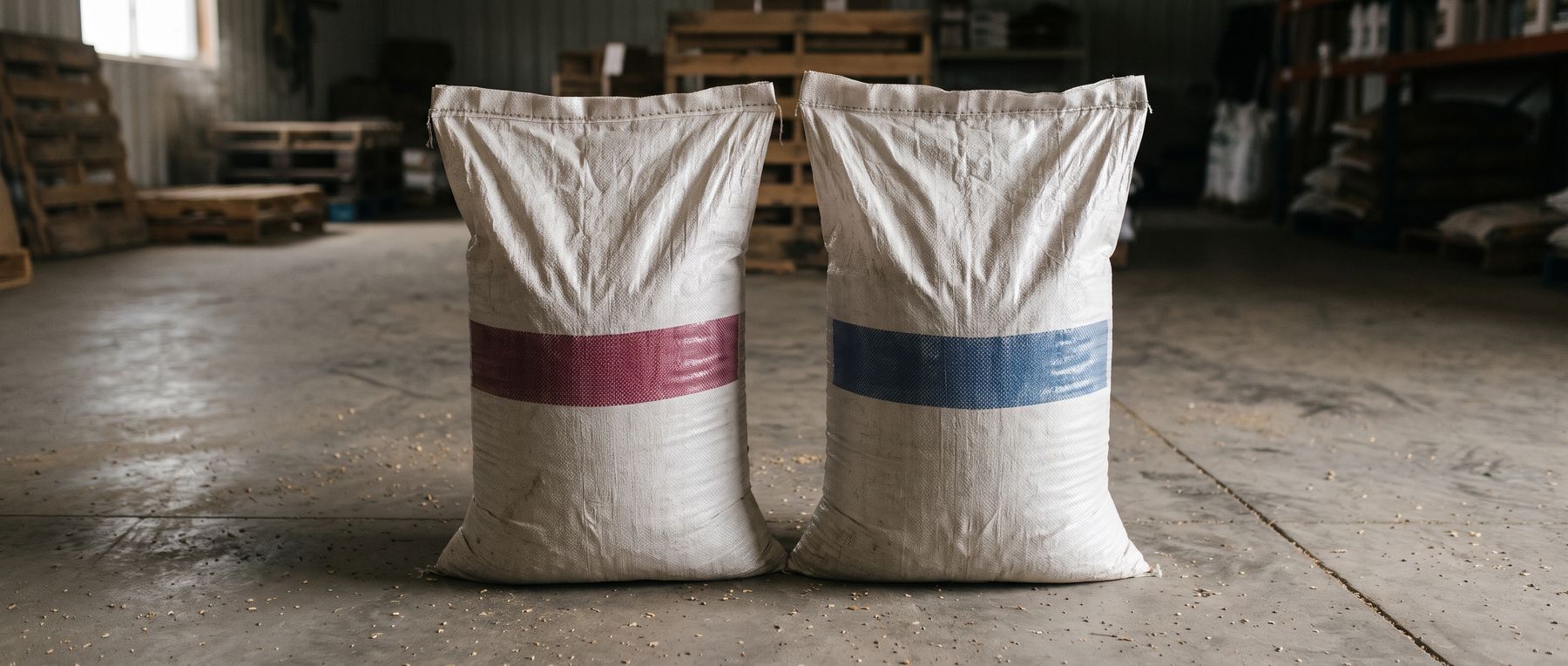
The male ceiling is a sixth of the female ceiling. That is not a typo. In females an effect begins high — around 2 kg/t of our material. In males the only dose that improved sperm converts to 0.27–0.51 kg/t, and above it sperm quality fell. There is no single stock dose and there cannot be one: the sexes are fed separately, in separate batches, in differently marked bags. Swapping the two feeds is the most expensive mistake a farm can make with this product.
What the tested doses showed

Part 4. Limits and next step
What is not proven
This is the section a serious reader opens first, so it is not buried at the end of a PDF.
- No study of ferutinin, or of Ferula tenuisecta, in fish or shrimp feed exists. Not one. Everything rests on two goldfish trials with a different Ferula species.
- Whether it works in carp, silver carp, trout, tilapia, sea bream, sea bass or shrimp — no data for any of them.
- Hatch at a female dose has never been measured in fish, nor separately from the males in birds. That is why hatch is a co-primary endpoint and not a footnote.
- Pharmacokinetics and a withdrawal period — none for any animal species.
- An assay method for ferutinin in muscle or eggs — none. This is why spent broodstock cannot go for food.
- Stability through pelleting, extrusion and storage — not studied.
- The other esters of the root (ferutin, teferin, ferutidin, tenuferidin, tenuferinin) — not assessed. “9.31% ferutinin” does not describe the whole estrogenic activity of a batch.
- Registration as a feed additive — none in any jurisdiction. Directive 96/22/EC covers aquaculture animals explicitly; whether plant-derived ferutinin falls under its Annexes II–III is not yet verified.
- Broodstock only. Not for grow-out and not for juveniles, in any dose — dietary estrogen turns juvenile males into females, and that is a known class effect, not a hypothetical risk.
Three kinds of partner
The project needs different things from different people. Find the line that describes you.
Feed producers and R&D
You can judge a raw material faster than we can. Ours comes with a measured active compound rather than a species name and a hope, and with a dose conversion that is recomputed from each batch assay.
Hatcheries and fish farms
The trial happens in your ponds. We supply the material for it free of charge, pay for the ferutinin assays, and hand over the on-farm instruction, the dose calculator and the trial logbook.
Industry consultants and development partners
You need a project you can put in front of a client without losing face. This one is built to be able to return a negative answer, and we state the gaps ourselves instead of waiting to be asked.
Who we are
KASANA QADOQ XIZMATI is a family company in Tashkent, Uzbekistan — processing and packaging. Ferula tenuisecta grows here. We clean and mill the root ourselves and assay ferutinin in every batch.
The same cleaned root is already a working line for us as a poultry feed material. Fish and shrimp broodstock is the new direction, and it is the reason for this page.
- Cleaned, milled Ferula tenuisecta root, our own raw-material base
- Ferutinin assayed per batch by HPLC — 9.31% in the current batch
- Batch specification and passport, with the figure printed on the bag
- Dose conversion, mixing procedure and on-farm instruction included
Request the dossier
The full package is ready and we send it on request, with no conditions attached:
- Trial proposal with the protocol, in English
- On-farm application instruction for the hatchery
- Raw-material specification and the batch passport form
- Dose calculator and the trial logbook
- Review of 58 sources with evidence levels, including what each one does not show
Khasan Niyazov · KASANA QADOQ XIZMATI · Tashkent, Uzbekistan